
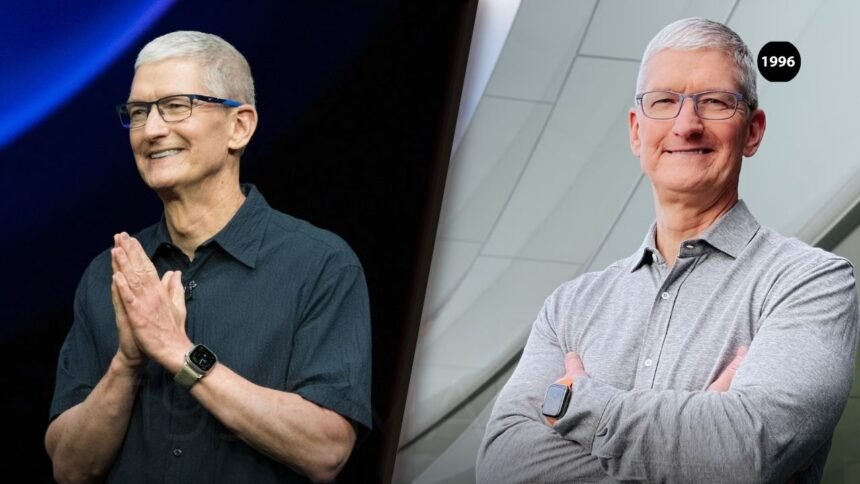
Tim Cook is one of the recognizable leaders in technology, yet his life has remained unusually private. Questions about his religion often appear online, including searches asking whether he is Jewish. Public records do not support that identification. Cook has personally discussed a Baptist childhood and described faith as important to his life. Those comments provide the clearest foundation for understanding his religious background, while other claims require caution because he has rarely offered detailed descriptions of his current beliefs.
The question of whether Tim Cook is Jewish becomes easier to examine when his words take priority over online speculation. In a 2015 Washington Post opinion piece, Cook wrote that he was baptized in a Baptist church as a child and that faith had always been important to him. He also explained that his upbringing did not teach him to use religion as a reason for discrimination. His statement offers useful context while leaving details about his present practice private.
Quick Bio Table Tim Cook
| Category | Details |
|---|---|
| Full Name | Timothy Donald Cook |
| Commonly Known As | Tim Cook |
| Date of Birth | November 1, 1960 |
| Birthplace | Mobile, Alabama, United States |
| Childhood Home | Robertsdale, Alabama |
| Nationality | American |
| Profession | Business Executive |
| Known For | Apple leadership |
| Education | Auburn University |
| Graduate Education | Duke University, Fuqua School of Business |
| Early Career | IBM, Intelligent Electronics, Compaq |
| Joined Apple | 1998 |
| Apple Leadership Role | Chief Executive Officer |
| Religious Background | Baptized in a Baptist church during childhood |
| Public Approach to Faith | Generally private, with some public comments about faith and religious freedom |
What Is Known About Tim Cook’s Religious Background?
Tim Cook grew up in Alabama during the 1960s and 1970s, a period when church life and Christian traditions were prominent across many Southern communities. His own account provides the strongest information about his early religious background. Cook stated that he was baptized in a Baptist church as a child and that faith remained important throughout his life. That statement establishes a Baptist connection during his upbringing without automatically defining every aspect of his present beliefs.
Cook has generally avoided turning his religion into a major part of his public identity. His interviews usually focus on Apple, technology, privacy, leadership, equality, and social responsibility rather than personal worship or church membership. Consequently, readers should distinguish between his documented religious upbringing and assumptions about his current practice. His public comments indicate that faith has influenced his outlook, but they do not provide enough information to map every detail of his personal spirituality or religious routine.
Tim Cook’s Family and Early Life
Tim Cook was born in Mobile, Alabama, on November 1, 1960, and grew up in nearby Robertsdale. His father, Donald Cook, worked in a shipyard, while his mother, Geraldine, worked at a pharmacy. Cook’s early years were far removed from the corporate world he would eventually enter. His background reflected an ordinary working family environment, and his education eventually opened a path toward engineering, business, and technology leadership. Those formative experiences remain important when examining his personal background.
Cook attended Robertsdale High School before studying industrial engineering at Auburn University. He later earned a Master of Business Administration from Duke University’s Fuqua School of Business. His career included positions at IBM, Intelligent Electronics, and Compaq before Steve Jobs recruited him to Apple in 1998. His professional journey eventually placed him among the world’s most influential technology executives. However, his rise in business did not make his private religious life significantly more public.
The Religious Environment of His Childhood
Growing up in Robertsdale, Cook experienced life in the American South during decades when Christian traditions held a strong place in many communities. His own description of being baptized in a Baptist church confirms that Christianity formed part of his childhood environment. However, a person’s childhood religious setting does not necessarily reveal how their beliefs develop later. Cook’s public comments suggest that faith remained meaningful, but he has not frequently discussed the details of his private spiritual life.
His 2015 comments are particularly useful because they connect his religious upbringing with his views about equality and discrimination. Cook said he had great reverence for religious freedom while explaining that he was never taught to use religion as an excuse to discriminate. This distinction became important when he criticized laws that he believed could permit discrimination under the banner of religious liberty. His statement shows how he understood faith as a source of moral responsibility rather than exclusion.
What Has Tim Cook Said About His Faith?
Cook has occasionally spoken about faith when discussing moral questions, social responsibility, and personal values. His most direct statement came in 2015, when he addressed legislation concerning religious freedom and discrimination. He referred to his Baptist baptism and said faith had always been important to him. Because those remarks came directly from Cook, they carry considerably more weight than unsupported profiles or social media claims about his religion.
His broader public record also shows that Cook sometimes uses language connected with purpose, values, and belief. During a 2017 MIT commencement speech, for example, he discussed trying meditation, seeking guidance and religion, and searching for meaning before eventually finding a strong sense of purpose at Apple. Such remarks show an interest in spiritual and philosophical questions, although they should not be interpreted as a detailed declaration of a specific religious denomination today.
Has Tim Cook Ever Identified as Jewish?
There is no reliable public statement from Tim Cook identifying himself as Jewish. The clearest first-person account about his religious background points in another direction: Cook wrote that he was baptized in a Baptist church as a child and that faith had remained important to him. Because this statement comes directly from Cook, it is more reliable than social media posts, anonymous claims, or websites that simply repeat one another. Therefore, describing Cook as Jewish would go beyond what established public evidence supports.
It is also important to separate religious identity from curiosity about someone’s heritage. A person can have family connections, friendships, cultural interests, or personal experiences involving different religious traditions without identifying with that faith. In Cook’s case, publicly available evidence does not establish a Jewish religious identity. His own comments instead provide a documented Baptist connection from childhood while leaving many details about his current private religious practice undisclosed. That distinction helps prevent speculation from being presented as fact.
Tim Cook and Christianity
Cook’s reference to being baptized in a Baptist church provides the strongest public connection between his childhood and Christianity. Baptism is an important Christian practice, although its meaning and significance vary among denominations. Cook did not present the statement as a detailed account of his current church membership or denomination. Instead, he connected his childhood baptism with a broader statement that faith had always played an important role in his life.
His public comments also show that religious belief has influenced the moral framework through which he approaches certain social questions. In his 2015 Washington Post essay, Cook argued that religious freedom should not become an excuse for discrimination. He described his own upbringing as one where religion was not taught as a justification for treating others unfairly. His position illustrates how he has publicly connected faith with fairness, dignity, and personal conscience.
Why People Search for “Tim Cook Jewish”
The phrase “Tim Cook Jewish” appears to reflect online curiosity about the private life of one of the world’s most prominent executives. Searchers often want to understand the religious background of famous people, particularly when those individuals discuss faith, morality, or social issues publicly. Cook’s comments about religion make the subject especially interesting because he has acknowledged the importance of faith without frequently discussing his personal religious practice in detail.
Another reason the question can spread online is that repeated claims can eventually look authoritative even when they lack a clear original source. A short biography may contain an unverified detail, another website may copy it, and search results can then give the impression that several independent sources confirm the same information. In reality, the sites may all trace back to one unsupported claim. For Cook’s religion, first-person statements and reputable reporting remain much stronger evidence.
Online Claims About Tim Cook’s Religion
Online discussions about celebrities frequently blur the difference between confirmed information and speculation. Religion can be especially vulnerable to this problem because readers may interpret someone’s words, family history, friendships, or public activities as evidence of a particular faith. Such assumptions are not enough to establish religious identity. With Tim Cook, the publicly documented information is limited but meaningful: he has described a Baptist baptism during childhood and has said faith is important to him.
A responsible biography should therefore avoid claiming that Cook follows Judaism unless he has publicly identified himself that way or strong, reputable evidence establishes it. At present, his public statements do not provide that confirmation. The safest conclusion is not that every detail of his current faith is known, but that the available record does not substantiate the claim that he is Jewish. This approach respects both factual accuracy and Cook’s longstanding preference for keeping much of his personal life private.
Tim Cook’s Views on Spirituality and Belief
Cook has occasionally connected his life story with questions of purpose, conscience, and moral responsibility. His public reflections about growing up in Alabama describe how his parents, church, reading, and personal experiences contributed to what he has called his moral sense. Reporting from The Washington Post has also documented his recollections about witnessing racial injustice as a young person and how those experiences influenced his later outlook.
These experiences help explain why religion appears in discussions about Cook without necessarily defining his entire worldview. His public identity includes many dimensions, including technology leadership, privacy advocacy, equality, philanthropy, and social issues. His faith appears to be one part of a broader moral framework rather than something he frequently places at the center of his public image. That makes it especially important not to reduce his beliefs to a label that he has not publicly claimed.
How His Faith May Have Influenced His Values
Cook has directly connected his upbringing and faith with his understanding of fairness. In discussing religious-freedom legislation in 2015, he argued that religion should not be used to justify discrimination. He also described his childhood experiences in the American South and emphasized the importance of equality. These comments suggest that his understanding of faith has been closely connected with how people should treat one another.
His broader career has included several public positions on privacy, equality, and individual rights. The Washington Post reported that experiences from his childhood helped shape what Cook described as his moral sense, while his later public actions reflected a willingness to speak about issues beyond Apple’s products. That does not prove that every position he has taken comes directly from religion, but it does show that personal values and moral reasoning have played a visible role in his public life.
Tim Cook’s Public Statements About Religion and Morality
One of Cook’s most important public discussions of religion came when he criticized legislation that he believed could enable discrimination. He stated that he had great respect for religious freedom while arguing that his own faith did not teach him to discriminate. His position was notable because he was not rejecting religion; instead, he was distinguishing religious liberty from using religion as a justification for unequal treatment.
That distinction provides useful context when examining questions about his beliefs. Cook’s public record shows respect for faith while also emphasizing equality and human dignity. He has not provided a detailed theological autobiography, nor has he regularly discussed specific doctrines or religious practices. As a result, readers should rely on what he has actually said rather than trying to reconstruct a complete belief system from isolated comments. His own words offer enough information to understand his background without inventing details about his private life.
Religion, Privacy, and Tim Cook’s Personal Life
Tim Cook has built a public career while maintaining firm boundaries around many aspects of his private life. As Apple’s chief executive, he regularly discusses technology, business, privacy, equality, and social responsibility, but he rarely provides detailed accounts of his personal religious practices. This limited public information creates an important distinction between what Cook has openly shared and what people may assume about him. His childhood Baptist baptism is documented, while the precise nature of his current religious routine remains largely private.
That privacy matters when evaluating claims about his faith. A public figure’s silence about a particular religion should not automatically become evidence either for or against membership in that faith. In Cook’s case, there is no reliable public statement identifying him as Jewish. There is, however, a direct statement from Cook about his Baptist upbringing and the continuing importance of faith. Those facts should remain the foundation for any responsible discussion of his religious background.
What Reliable Sources Reveal About His Beliefs
Reliable sources provide a relatively clear picture of Cook’s religious background without revealing every detail of his private beliefs. In his 2015 Washington Post essay, Cook personally stated that he had been baptized in a Baptist church as a child and that faith had always been important to him. Because the information came directly from Cook, it offers considerably stronger evidence than unsourced biographies, social media posts, or websites making unsupported claims about his religion.
Other reporting has explored Cook’s upbringing and the experiences that shaped his moral outlook. The Washington Post reported on his childhood in rural Alabama and described how encounters with racial injustice contributed to the development of his moral perspective. These accounts help explain aspects of his public values, although they should not be mistaken for a complete religious biography. The available evidence supports discussing his Christian background and personal reflections on faith, but it does not justify assigning him a Jewish identity without additional evidence.
Final Thoughts
So, is Tim Cook Jewish? Based on the reliable public information available, there is no solid evidence that Cook identifies as Jewish. The clearest account comes from Cook himself, who said he was baptized in a Baptist church as a child and that faith had always been important to him. His public comments point toward a Christian religious upbringing, while his present-day private practices and precise religious affiliation remain less clearly documented. For that reason, the Jewish claim should be treated as unverified rather than established.
Cook’s story also shows why celebrity biography searches require careful sourcing. His Alabama upbringing, Baptist baptism, comments about faith, and views on equality are publicly documented, but those details do not justify filling gaps with assumptions. He has chosen to keep much of his personal life private, and that boundary deserves respect. The most accurate conclusion is therefore straightforward: Tim Cook has publicly described a Baptist Christian upbringing and the importance of faith, but there is no reliable public basis for labeling him Jewish.
Common Questions About Tim Cook’s Religion
Is Tim Cook Jewish?
There is no reliable public evidence establishing that Tim Cook identifies as Jewish. His own published comments state that he was baptized in a Baptist church as a child and that faith has remained important to him. That information provides a documented Christian connection, although it does not necessarily describe every aspect of his present-day religious life. Therefore, the claim that Cook is Jewish should not be presented as an established fact based on the available public record.
Was Tim Cook raised Christian?
Yes. Cook has publicly described being baptized in a Baptist church during childhood. His comments also indicate that religion and faith played a meaningful role in his upbringing. However, readers should avoid assuming that a childhood religious background automatically reveals someone’s complete adult beliefs or current religious affiliation. Cook has kept many details of his personal spiritual life outside the public spotlight, so his own documented statements remain the most appropriate source for understanding this part of his background.
What denomination was Tim Cook connected to?
The denomination Cook specifically mentioned in his public account was Baptist. He referred to being baptized in a Baptist church as a child. He did not use that statement to provide a comprehensive description of his current denomination, church membership, or regular religious practices. Consequently, it is more accurate to describe him as having a documented Baptist and Christian upbringing rather than making unsupported claims about his current denominational status.
Has Tim Cook spoken publicly about religion?
Yes. Cook has discussed faith publicly, particularly when explaining his opposition to laws or policies that he believed could permit discrimination. He wrote about his religious upbringing and explained that his faith did not teach him to discriminate against other people. His comments demonstrate that religion has influenced at least some of his moral reasoning, even though he does not frequently discuss his private spiritual practices in interviews or public appearances.
Why do people ask whether Tim Cook is Jewish?
The question likely comes from general curiosity about the personal backgrounds of prominent public figures. Cook is one of the most recognizable technology executives in the world, and his public discussions about faith, morality, and equality have encouraged interest in his beliefs. Online search results can also amplify uncertain claims when websites repeat information without identifying a reliable original source. That makes it especially important to distinguish documented statements from speculation when researching his religion.
Does Tim Cook’s religion influence his work?
It would be difficult to determine how much of Cook’s professional decision-making comes specifically from religion because he has not provided a detailed account connecting individual business decisions with particular religious teachings. However, he has publicly connected his faith and upbringing with ideas about fairness, equality, and how people should treat one another. His public advocacy on social issues therefore provides some evidence of a values-based worldview, but it would be inappropriate to attribute every position he takes directly to religion.
Stay More Update 1996 MAGAZINE