
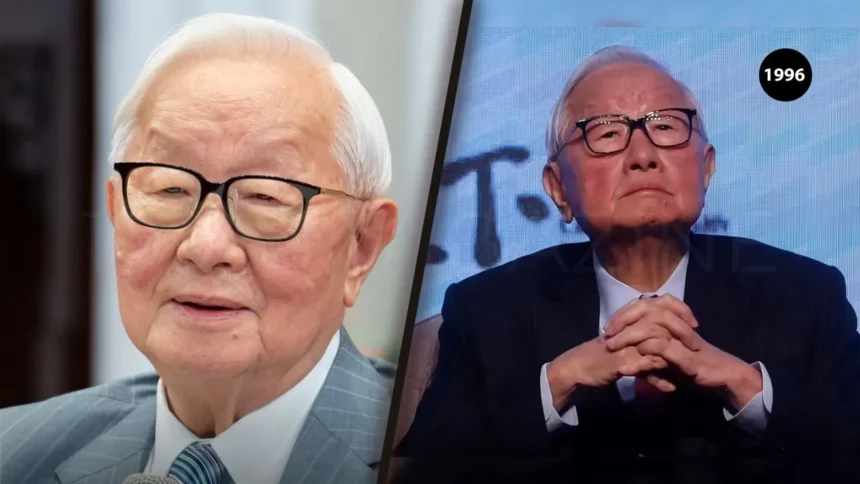
Morris Chang commands respect as the Godfather of Semiconductors. At 94 years old in 2026, this visionary engineer founded Taiwan Semiconductor Manufacturing Company (TSMC) and helped reshape the global technology landscape. His personal fortune reflects decades of strategic leadership and the explosive growth of the chip industry that now powers artificial intelligence, smartphones, and advanced computing worldwide.
People often ask exactly how much Morris Chang is worth today. Reliable estimates place his net worth between $8.5 billion and $9 billion as of April 2026. This wealth stems almost entirely from his long-held equity stake in TSMC, which has grown into one of the world’s most valuable companies with a market capitalization exceeding $1.7 trillion. This in-depth guide explores the real sources of his fortune, his remarkable life journey, the business decisions that created massive value, potential risks, and the enduring lessons from his career.
Quick Bio Morris Chang
| Attribute | Details |
|---|---|
| Full Name | Morris Chang (張忠謀 / Chang Chung-mou) |
| Date of Birth | July 10, 1931 (Age 94 in 2026) |
| Place of Birth | Ningbo, Zhejiang Province, China |
| Nationality | Taiwanese-American |
| Education | B.S. & M.S. Mechanical Engineering – MIT (1952, 1953) Ph.D. Electrical Engineering – Stanford University (1964) |
| Spouse | Sophie Chang |
| Known For | Founder & long-time Chairman/CEO of TSMC; pioneer of the pure-play foundry model |
| Career Highlights | 25+ years at Texas Instruments; President of ITRI (Taiwan); Founded TSMC in 1987 at age 56 |
| Primary Wealth Source | Approximately 0.5% equity stake in TSMC (direct and family holdings) |
| Estimated Net Worth 2026 | $8.5 billion – $9 billion (Forbes / Bloomberg estimates, April 2026) |
| Current Status | Retired from day-to-day operations; remains a respected global advisor |
Early Life as a War Refugee
Morris Chang entered the world in 1931 amid turbulent times in China. His family faced repeated displacement during the Sino-Japanese War and the Chinese Civil War. They moved between cities and eventually to Hong Kong before settling temporarily in Chongqing. These early experiences taught him adaptability and resilience under pressure.
At age 18 in 1949, Chang left for the United States alone to pursue education. He initially studied at Harvard but soon transferred to MIT. Life as an immigrant student brought cultural and financial challenges, yet he excelled through focused effort. This period laid the foundation for his engineering mindset and exposed him to America’s booming post-war technology sector, which later influenced his career path in semiconductors.
Academic Excellence and Entry into Industry
Chang earned bachelor’s and master’s degrees in mechanical engineering from MIT in 1952 and 1953. Texas Instruments then sponsored his doctoral studies at Stanford University, where he completed a Ph.D. in electrical engineering in 1964. This rare combination of mechanical and electrical expertise gave him a unique advantage in the emerging chip industry.
He joined Texas Instruments full-time and spent more than 25 years there. Chang rose through technical and management ranks while contributing to key manufacturing innovations. He learned high-volume production systems and leadership principles that later became central to TSMC’s success. By the early 1980s, he had gained international recognition but felt limited in further advancement at TI, setting the stage for his return to Asia.
Founding TSMC at Age 56
In 1987, at the age of 56, Morris Chang took a bold step and founded TSMC in Taiwan. The government and Industrial Technology Research Institute recruited him to develop a world-class semiconductor industry. He introduced the revolutionary “pure-play foundry” model a company focused solely on manufacturing chips designed by other firms without competing in design or end products.
This model solved a major industry problem. Chip designers previously needed their own expensive fabrication plants. TSMC offered reliable, high-quality manufacturing services to everyone, which encouraged innovation across the ecosystem. Initial funding came from the Taiwanese government, Philips, and local investors. Many skeptics doubted success against established giants, but Chang’s vision and execution proved them wrong within years.
Growth of TSMC and Its Impact on Global Tech
Under Chang’s leadership as CEO until 2005 and again briefly in 2009, TSMC became the world’s largest contract chip manufacturer. The company maintained relentless focus on technology leadership, customer trust, and operational excellence. By the 2020s, TSMC produced over 90% of the world’s most advanced semiconductors.
In 2026, TSMC plays a critical role in AI, smartphones, automotive electronics, and high-performance computing. Major clients include Apple, Nvidia, AMD, and Qualcomm. The company’s market capitalization surpassed $1.7 trillion, driven largely by surging demand for AI chips. This phenomenal growth directly multiplied the value of Morris Chang’s equity holdings and solidified his status as a semiconductor billionaire.
Sources Behind Morris Chang Net Worth
Morris Chang’s fortune comes predominantly from his approximately 0.5% stake in TSMC, accumulated through compensation, stock purchases, and dividends over decades. Public records from his time as chairman show he and his family maintained significant ownership even after retirement.
As TSMC’s valuation soared with AI demand, this stake translated into billions. Current estimates put Morris Chang net worth at $8.5 billion to $9 billion in 2026. Unlike many tech founders who sell large portions early, Chang retained substantial equity, allowing his wealth to compound alongside the company’s success. He also benefits from other investments and past executive compensation, but TSMC remains the overwhelming source of his fortune.
Leadership Style That Built Lasting Value
Chang led with integrity, long-term thinking, and customer-centric principles. He insisted TSMC stay neutral so all clients could trust the company with their most sensitive designs. His management combined rigorous engineering standards with humble collaboration.
He invested heavily in employee development and R&D, even during economic downturns. Chang also navigated complex geopolitical relationships with diplomacy, balancing interests across Taiwan, the United States, China, and other partners. These qualities not only drove TSMC’s dominance but also created enormous shareholder value that boosted his personal net worth significantly.
Challenges and Risks in the Semiconductor World
The chip industry demands enormous capital for new fabrication plants and faces constant pressure to advance process nodes. TSMC invests tens of billions annually while expanding production in the United States, Japan, Germany, and elsewhere to reduce geopolitical risks.
Trade tensions and export controls between the U.S. and China add uncertainty. Taiwan’s strategic position creates both opportunity and vulnerability. Morris Chang has publicly supported geographic diversification while cautioning that moving advanced manufacturing raises costs. These factors influence TSMC’s stock performance and, consequently, the fluctuations in his net worth.
Read More Related Article Tom Read Wilson
Personal Life, Family, and Philanthropy
Morris Chang married Sophie Chang, and the couple supports education and cultural initiatives. MIT named a building in their honor to recognize their contributions. Even in retirement, Chang remains active as a mentor and advisor on technology policy matters.
His life story inspires countless people. A refugee who immigrated alone at 18, earned top degrees through perseverance, and founded a transformative company at age 56 demonstrates that bold action and sustained excellence can create extraordinary results at any stage of life.
Key Lessons from Morris Chang’s Career
Entrepreneurs can learn several powerful lessons from Chang. First, age should never limit ambition he built TSMC well past typical retirement age. Second, solve genuine industry problems rather than chasing trends. Third, build deep trust through neutrality and consistent quality. Finally, combine technical expertise with patient, strategic vision.
These principles apply across industries. Chang’s journey shows how compounding advantages over decades often generates greater wealth and impact than short-term gains. His emphasis on ethical leadership and ecosystem building offers a timeless model for sustainable success.
Conclusion
Morris Chang net worth, currently estimated at $8.5 billion to $9 billion in 2026, represents the rewarding outcome of a lifetime of innovation and determination. From wartime displacement to founding the world’s most important semiconductor company, his path highlights resilience, technical brilliance, and visionary leadership. TSMC’s rise to a $1.7 trillion valuation not only created immense shareholder value but also transformed global technology supply chains.
As artificial intelligence and advanced computing continue expanding, Chang’s influence endures through the company he built. His story reminds us that true fortune often emerges from solving fundamental problems with integrity and patience. In a fast-changing world, Morris Chang stands as a powerful example of how one individual’s vision can shape industries and create lasting wealth.
Frequently Asked Questions
How much is Morris Chang net worth in 2026?
Reliable estimates place Morris Chang net worth between $8.5 billion and $9 billion as of April 2026, based primarily on his equity in TSMC.
What is the main source of Morris Chang’s wealth?
His fortune comes almost entirely from an approximately 0.5% stake in TSMC that he and his family have held for decades.
At what age did Morris Chang start TSMC?
He founded TSMC in 1987 at the age of 56, after a long career at Texas Instruments.
Does Morris Chang still hold shares in TSMC?
Yes. He and his family continue to own a meaningful stake even after his retirement as chairman in 2018.
What is Morris Chang’s educational background?
He earned B.S. and M.S. degrees in mechanical engineering from MIT and a Ph.D. in electrical engineering from Stanford University.
How has TSMC’s success affected Morris Chang net worth?
TSMC’s growth to a $1.7 trillion market cap, driven by AI demand, has significantly increased the value of his long-held equity stake.
Stay More Update 1996 Magazine